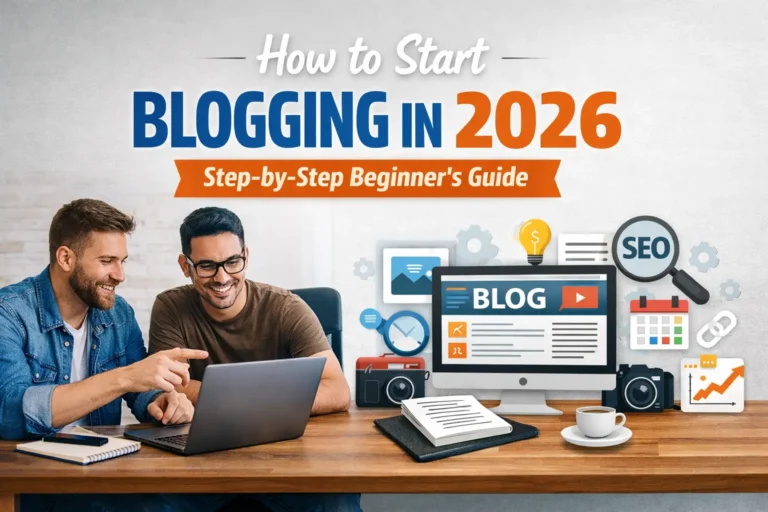

Starting a blog in 2026 feels easier than ever, yet simultaneously more competitive. With AI-generated content flooding the internet, authentic human voices matter more than they ever did. If you’ve been thinking about launching a blog—whether to share your passion, build your personal brand, or earn passive income—you’re in the right place. This beginner’s guide walks you through every single step, from picking your niche to publishing your first post and actually making money from it.
The good news? You don’t need to be a tech wizard, a professional writer, or have a massive budget. Thousands of successful bloggers started exactly where you are right now, armed with nothing but an idea and determination. By the end of this guide, you’ll have a fully functional, SEO-optimized blog ready to attract real readers.
What Is Blogging and Why Does It Still Matter in 2026?
Blogging isn’t dead—it’s evolving. In fact, according to recent data, blogs remain the leading content format for demand generation. Nearly 80% of small business owners still create content themselves, proving that blogging is a core business strategy, not a vanishing trend.
Here’s why blogging matters more than ever:
Search Engine Love: A well-maintained blog gives Google more content to crawl and index. Each new post creates an opportunity to rank for different keywords and questions your target audience is searching for. Unlike social media posts that disappear in hours, blog posts work for you indefinitely.
Trust & Authority: When someone reads your helpful, well-written blog posts, they begin seeing you as an expert. This builds trust—and trust turns readers into customers, subscribers, and loyal followers.
Long-Term Asset: Social media content is temporary. Blog posts are permanent assets that continue driving traffic months or even years after publication. This is the power of compounding content.
AI-Era Advantage: While AI can generate generic content at scale, what readers truly crave is authentic, human-written advice backed by real experience. If you combine personal insights with solid SEO practices, your blog will stand out in 2026’s crowded digital landscape.
Step 1: Choose Your Blog Niche (The Foundation)
The biggest mistake new bloggers make is choosing a topic that’s too broad. “Everything about life” or “general lifestyle tips” won’t work. You need a niche—a focused topic where you have genuine expertise or passion.
What Makes a Good Niche?
A winning niche has three qualities: (1) it’s something you’re genuinely interested in, (2) people are actively searching for information about it, and (3) there’s potential to monetize it eventually.
Brainstorm Your Niche:
Start by listing your interests, hobbies, and professional expertise. If you love cooking, narrow it down—not “cooking,” but “quick weeknight meals for busy parents” or “plant-based baking for beginners.” This specificity is your superpower. It reduces competition and helps you attract a targeted, loyal audience instead of chasing everyone.
Research Demand:
Before committing, verify that people actually search for your niche topic. Use Google’s search suggestions (type your topic into Google and look at the dropdown suggestions), Google Trends, or free tools like Keywords Everywhere. If your niche has search volume, you’ve found a winner.
Real-World Example:
Instead of “personal finance,” successful blogs target “how to pay off student loans under 30” or “investing for complete beginners.” These narrower niches have less competition and attract readers with specific problems you can solve.
Step 2: Select Your Blogging Platform
Your platform is the foundation where your blog lives. Different platforms serve different needs, and choosing wisely saves you from frustration later.
Platform Comparison Table
| Platform | Best For | Cost | SEO Control | Learning Curve |
|---|---|---|---|---|
| WordPress.org (Self-Hosted) | Serious bloggers, SEO focus, monetization | $3-15/month hosting + domain | Excellent | Medium |
| WordPress.com | Casual bloggers, simplicity | Free to $300+/year | Good | Easy |
| Blogger | Absolute beginners, free options | Free | Basic | Very Easy |
| Wix | Visual design-focused blogs | $5-27/month | Good | Easy |
| Squarespace | Creative/portfolio blogs | $12-33/month | Good | Easy |
| Shopify | Blog + e-commerce integration | $29-299/month | Excellent | Medium |
What We Recommend for Beginners: Self-hosted WordPress (WordPress.org) is the industry standard. Here’s why: you own your content, you have complete SEO control, plugins extend functionality infinitely, and you’re not locked into a platform. The initial setup takes 20 minutes and costs about $5 per month for hosting.
Budget Breakdown:
- Domain name: $10-15/year
- Web hosting: $3-12/month
- Theme (optional): Free to $100 one-time
- Plugins (mostly free): $0-50/month
Total first-year investment: $50-150 for a professional setup.
Step 3: Register Your Domain & Set Up Hosting
Your domain is your blog’s address (like www.yourblog.com). Your hosting is where your blog actually lives on the internet.
Choosing a Domain Name:
Make it memorable, easy to spell, and ideally include a keyword related to your niche. If your blog is about “sustainable living,” a domain like “sustainabllivingguide.com” clearly signals what your blog is about—both to readers and search engines.
Avoid numbers, hyphens, and trendy slang that might seem outdated in 2-3 years. You’re building a long-term asset, not chasing viral moments.
Popular Domain Registrars: GoDaddy, Namecheap, Bluehost, HostGator, and SiteGround are reliable options. Most offer domain + hosting bundles that cost $5-15 monthly.
One Pro Tip: Set up an email address with your domain name (like hello@yourblog.com). This looks far more professional than using Gmail when contacting potential sponsors, guest post partners, or clients.
Step 4: Install & Customize WordPress
Once you’ve registered your domain and hosting, installing WordPress is as simple as clicking a button. Most hosting providers include one-click WordPress installation.
Basic Setup Steps:
- Log into your hosting account’s control panel
- Find “WordPress” or “Installatron”
- Click “Install WordPress”
- Choose your domain and blog title
- Create your admin username and password
- Done—WordPress is live
Customize Your Design:
Choose a responsive theme (it automatically adjusts to mobile, tablet, and desktop). Popular free themes include Astra, OceanWP, and GeneratePress. If you want more advanced design options, consider premium themes like Divi or Elementor (both offer drag-and-drop builders).
Essential Plugins to Install:
- Yoast SEO or Rank Math: Guides you on SEO optimization as you write
- Jetpack or Wordfence: Provides security and backup
- Google Site Kit: Connects Google Analytics and Google Search Console
- Akismet: Filters spam comments
- Elementor or Divi: Makes page-building easy without coding
Step 5: Plan Your Content Strategy & Target Keywords
This is where your blog’s success is decided. You need a content strategy—not just random posts, but intentional topics that attract your ideal readers.
Understand Your Audience:
Who will read your blog? What problems do they have? What questions keep them up at night? Create a mental profile of your ideal reader. The more specific, the better your content will resonate.
Keyword Research for Beginners:
Keywords are the search phrases people type into Google. If you target the right keywords, Google will send you free traffic for years.
Start simple: Type your niche topic into Google. Look at the dropdown suggestions—these are real searches people make. Write them down.
For deeper research, use these free/affordable tools:
- Google Keyword Planner (free)
- Google Trends (free)
- Ubersuggest free tier
- Keywords Everywhere Chrome extension (~$10/month)
Target Long-Tail Keywords:
Instead of competing for “blogging” (extremely competitive), target “how to start a blog as a complete beginner” or “best blogging platform for making money 2026.” These longer phrases have less competition and attract readers with specific intent.
Practical Example:
Instead of writing “A Guide to Social Media,” write “How to Build a Following on Instagram from Zero: 10 Proven Tactics for 2026.” The second title is specific, includes a keyword phrase, and promises clear value.
Step 6: Write Your First Blog Post (Do This Right)
Your first post should be substantial, helpful, and SEO-optimized. Here’s the formula:
Structure Your Post:
- Compelling Headline: Include your main keyword naturally. Avoid clickbait; be honest about what readers will get.
- Introduction (3-4 lines): Hook readers with a relatable problem or surprising stat. Tell them exactly what they’ll learn.
- Body Content: Use short paragraphs (2-3 sentences max), multiple subheadings, bullet points, and visuals to make scanning easy.
- Conclusion: Summarize your main points and add a soft call-to-action (subscribe, download a resource, read another post).
Length Matters: Aim for 2,500-3,500 words for comprehensive beginner’s guides. Longer content ranks better, but only if it’s genuinely helpful and engaging—not padded with fluff.
Make It Readable:
- Use short sentences and simple language
- Break content into small sections with descriptive subheadings
- Include at least 2-3 relevant images or graphics
- Use numbered lists or bullet points for actionable tips
- Highlight key phrases with bold text
SEO Checklist Before Publishing:
- Include main keyword in title, first paragraph, and 2-3 times throughout
- Use 2-3 related keywords (LSI keywords) naturally in the content
- Add internal links to other relevant posts on your blog (or use placeholder text if this is your first post)
- Optimize your meta description (150-160 characters, includes main keyword)
- Create a descriptive URL slug (not random numbers or symbols)
- Add alt text to images describing the image content
- Use short paragraphs and multiple subheadings for readability
Personal Insights Make the Difference:
Don’t just regurgitate information. Add your unique perspective. Share a mistake you made, a lesson you learned, or an example from your own experience. This human element is what keeps readers engaged and distinguishes your blog from AI-generated content.
Step 7: Publish Consistently & Promote Your Blog
Starting a blog is exciting, but consistency wins the game. Most blogs fail because creators publish 2-3 posts then disappear.
Publishing Schedule:
Consistency matters more than frequency. Start with one post per week or every two weeks—whatever you can sustain long-term. This signals to Google that your blog is active and worthy of being crawled regularly.
Promotion Strategy:
Your blog won’t grow if no one knows it exists. Here’s where to share your new posts:
- Social Media: Share on platforms where your audience hangs out (LinkedIn for professional content, TikTok/Instagram for lifestyle, Twitter for news/industry insights)
- Email List: Start building an email list from day one. Offer a free download or bonus content in exchange for emails
- Engage in Communities: Comment genuinely on other blogs in your niche, participate in Reddit communities, answer questions on Quora
- Guest Posting: Once you have 5-10 posts published, pitch guest posts to larger blogs in your niche—this builds credibility and backlinks
- SEO Takes Time: Don’t expect traffic immediately. Most blogs see significant organic traffic after 3-6 months of consistent, quality posts. Be patient.
Common Blogging Mistakes to Avoid
Learning from others’ failures accelerates your success. Here are the biggest mistakes new bloggers make:
Mistake #1: Starting Before Choosing a Niche
Broad blogs fail. Before you write a single post, decide your specific topic. This clarity drives everything—content creation becomes easier, audience targeting improves, and monetization becomes realistic.
Mistake #2: Neglecting Mobile Optimization
Over 50% of web traffic is mobile. Your blog must look perfect on phones and tablets, not just desktops. Always preview your posts on mobile before publishing.
Mistake #3: Ignoring SEO from the Start
Many beginners write posts they think are good but never optimize for search. By the time they learn SEO basics, they’ve published dozens of unoptimized posts. Optimize from post one—it’s easier than retrofitting later.
Mistake #4: Publishing Thin, Shallow Content
In 2026, thin content (under 1,000 words of generic info) doesn’t rank. Google favors comprehensive, helpful content that thoroughly answers questions. Quality beats quantity every single time.
Mistake #5: Expecting Money Immediately
Monetization comes after you’ve built an audience and authority. Most successful blogs take 6-12 months before earning meaningful income. Build trust first, money follows.
Mistake #6: Setting it and Forgetting It
A blog without updates dies. Search engines notice when you stop publishing. Aim for consistent posting—even if it’s one quality post monthly, consistency beats sporadic bursts.
How to Monetize Your Blog in 2026
Once you have an audience, multiple income streams open up. Here are the most realistic for beginners:
Affiliate Marketing: Recommend products you genuinely use and earn commissions when readers buy through your links. This is often the easiest starting point. Join programs like Amazon Associates, Impact, or ShareASale.
Sponsored Posts: Brands pay you to write about their products. This typically requires 10,000+ monthly visitors but varies by niche.
Digital Products: Create and sell courses, templates, guides, or checklists related to your niche. You control pricing and profit margins completely.
Coaching or Services: Use your blog to showcase expertise and sell one-on-one coaching, consulting, or freelance services.
Display Ads: Google AdSense or Mediavine generate small revenue from ads displayed on your blog. This requires significant traffic (10,000+ monthly views for Mediavine) but is passive income.
Email Marketing: Build an email list through your blog. Monetize through affiliate promotions, your own products, or sponsored emails.
Realistic Income Timeline:
- Months 1-3: $0 (building foundation)
- Months 4-6: $0-100/month (affiliate commissions trickling in)
- Months 7-12: $100-500/month (growing audience, multiple streams)
- Year 2+: $500-5,000+/month (established authority, multiple income sources)
The bloggers making $5,000+ monthly typically have one niche expertise, consistent publishing, and multiple income streams working together.
FAQ: Your Blogging Questions Answered
Q1: How long before my blog makes money?
A: Most blogs take 6-12 months before generating meaningful income. Success depends on niche competitiveness, content quality, consistency, and promotional effort. Patience is essential—you’re building a long-term asset.
Q2: Do I need to be a good writer to blog successfully?
A: Not at all. Your authentic voice matters far more than perfect prose. Many successful bloggers write conversationally, as if talking to a friend. Write like you speak, then edit for clarity. That’s it.
Q3: Which platform is best for beginners?
A: WordPress.org (self-hosted) is best long-term, but it requires more technical knowledge. If you’re completely non-technical, start with WordPress.com, Wix, or Squarespace. You can migrate later if needed.
Q4: How often should I publish new posts?
A: Consistency beats frequency. One quality post weekly, or bi-weekly, outperforms sporadic bursts of 5 posts then silence. Start with what you can sustain indefinitely.
Q5: Can I start a blog for free?
A: Yes, using Blogger or WordPress.com free tier, but you won’t own your content and have limited customization. For serious blogging, invest $50-150 yearly in a self-hosted setup. It’s minimal and worth every penny.
Conclusion
Starting a blog in 2026 is genuinely achievable for anyone willing to show up consistently. You don’t need technical expertise, a massive budget, or professional writing skills—just clarity on your niche, a commitment to helping your readers, and willingness to learn as you go.
The path is straightforward: (1) choose a niche you’re passionate about, (2) pick a platform and get it live in minutes, (3) do basic keyword research, (4) write comprehensive, helpful content, (5) optimize for both humans and search engines, (6) share your posts consistently, and (7) be patient while building.
The hardest part isn’t technical—it’s showing up week after week, writing helpful posts, promoting them, and trusting the process when results feel slow.
But here’s the truth successful bloggers know: every post you publish is an asset that works for you forever. The compounding effect is real. Six months in, you’ll have 20+ posts attracting organic search traffic. A year in, your blog becomes a reliable lead/income generator. Three years in, you’ll have created something truly valuable.
Your next step is simple: Register a domain, choose a platform, and publish your first post this week. Not next month—this week. Done beats perfect, always.
Your audience is waiting for your unique voice and perspective. Let’s go build something great.