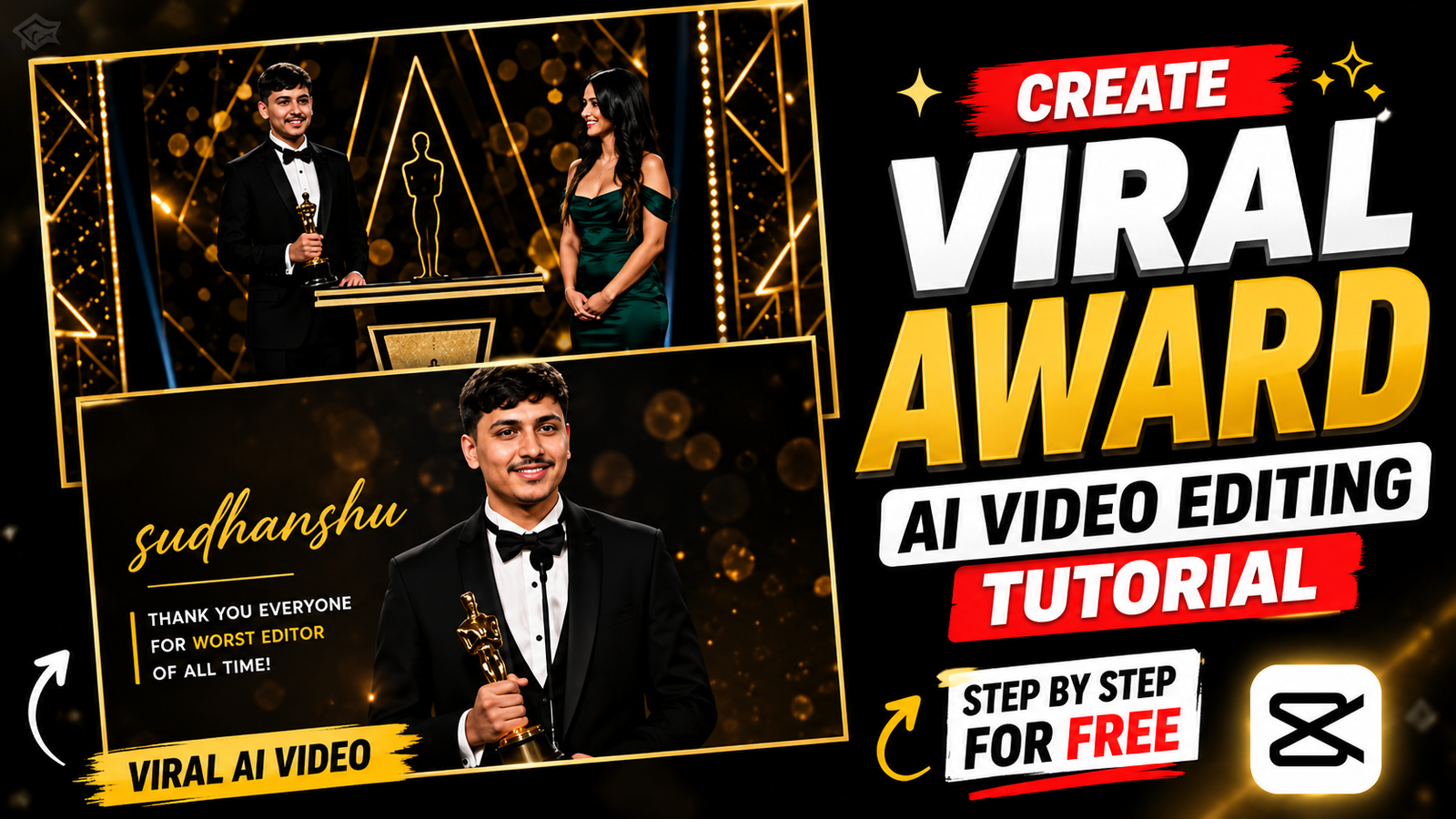

AI video creation has become much easier in 2026. You can now combine AI-generated images, video effects, voiceovers, captions, music, and simple editing techniques to create attractive award-style AI videos without expensive equipment.
If you have seen viral videos featuring celebrities, fictional characters, athletes, creators, or dramatic award ceremonies, you may wonder how these videos are made. The good news is that beginners can create similar AI award videos by combining several free or freemium tools with a simple editing workflow.
In this guide, we’ll explain how to make viral award AI videos for free, from creating the idea and generating visuals to editing the final video for TikTok, YouTube Shorts, Instagram Reels, and other short-form platforms.
What Are Award AI Videos?
Award AI videos are short videos designed around an award ceremony or winner announcement concept.
A typical video might show:
- An award stage
- A winner walking toward the stage
- A trophy
- Dramatic lighting
- Crowd reactions
- Winner announcements
- Cinematic camera movement
- AI-generated characters
- Background music
- Voice narration
- Animated text
The exact style depends on the creator’s idea.
Because short videos can be highly visual, combining AI-generated scenes with fast editing can make the content more engaging.
Why Are AI Award Videos Going Viral?
Short-form platforms reward content that quickly captures attention.
An award-style video can create curiosity because viewers want to know:
“Who won?”
This simple question can encourage people to watch until the end.
Strong Visual Hook
A dramatic award stage, trophy, spotlight, or crowd reaction can immediately attract attention.
Curiosity
A winner announcement naturally creates suspense.
Short Format
The concept works particularly well for short-form videos.
Easy to Customize
You can change the award category, characters, background, narration, and ending.
What You Need to Make an AI Award Video
You don’t need expensive equipment.
A basic workflow can include:
- An AI image-generation tool
- An AI video-generation or animation tool
- A video editor
- Voiceover or text-to-speech
- Background music
- Captions
- A smartphone or computer
Many tools offer free plans or limited free credits, although availability and limits can change.
First Image
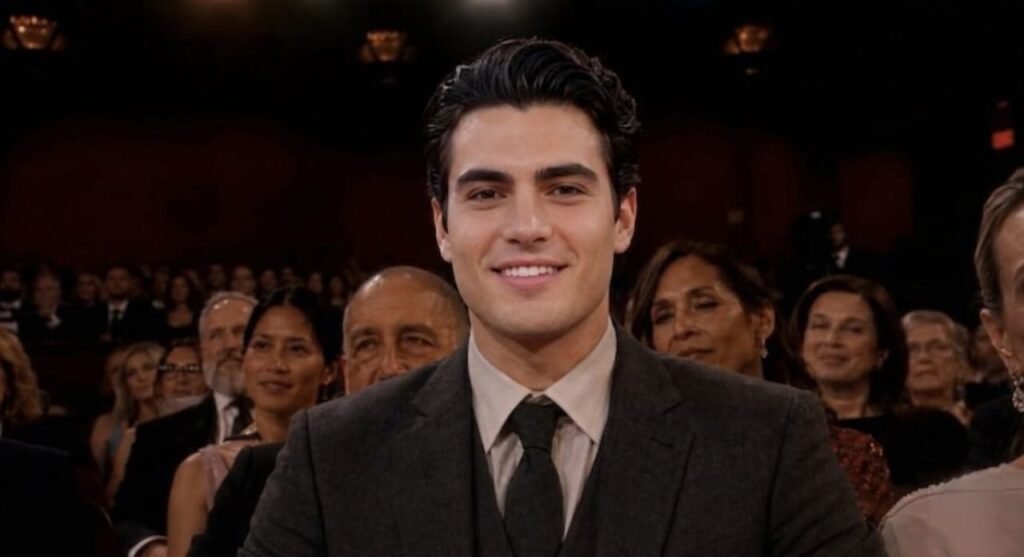
1 st pic me jo ladka hai usko remove kar ke mujhe add kar do yani ki 2secound wale ladke ko or hai
face change na ho 2secound wale ladke ka ok
or ha pose and reaction sab 1st wale pic ki trha rhe or bs
second wale ladke ka 100% same face rhe ok
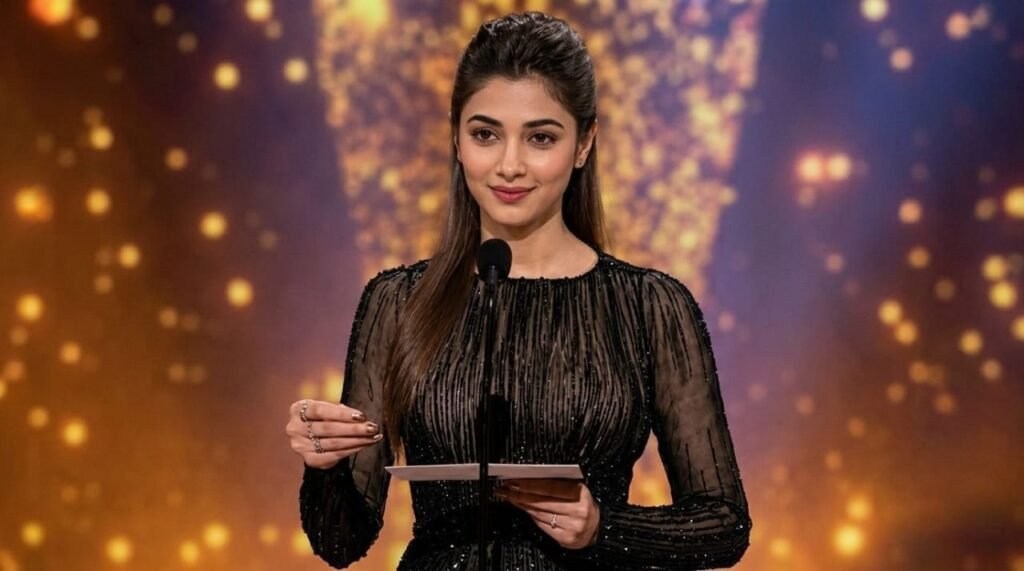
Image 2
Step 1: Choose a Viral Award Video Idea
Start with a simple concept.
For example:
“AI Creator of the Year 2026”
or:
“The Most Unexpected Award Winner”
Other ideas include:
- Best AI Character Award
- Funniest Creator Award
- Best Gaming Moment Award
- Future Technology Award
- Best Movie Character Award
- AI Innovation Award
- Most Unexpected Winner
- Best Football Moment Award
The important thing is to create a clear story that can be understood quickly.
Step 2: Write a Short Script
Keep your script short if you are creating a TikTok, Reel, or YouTube Short.
A simple structure can be:
Opening Hook
Start with a question or dramatic statement.
Example:
“And the award for the most creative AI video of 2026 goes to…”
Build Suspense
Show the stage, nominees, trophy, or audience reaction.
Winner Announcement
Reveal the winner near the end.
Ending
Finish with a short reaction or call to action.
For example:
“Did you expect this winner?”
This can encourage viewers to comment.
Step 3: Create AI Images
The next step is creating the visual scenes.
You can generate individual images for:
- Award stage
- Trophy
- Presenter
- Nominees
- Winner
- Audience
- Red carpet
- Celebration scene
Use Consistent Characters
If your video contains the same character in multiple scenes, try to keep their appearance consistent.
Use similar descriptions for:
- Clothing
- Hair
- Age
- Facial characteristics
- Lighting
- Camera style
- Background
Consistency can make the final video look more professional.
Step 4: Turn Images Into Video
Static AI images can be animated using an AI video tool or traditional editing techniques.
You can create movement such as:
- Camera zoom
- Slow pan
- Character movement
- Background motion
- Spotlight movement
- Trophy reveal
- Crowd reaction
Even simple motion can make still images feel more dynamic.
Video Prompt 1
Use the uploaded image. Do not change the face, clothes, location, address, objects, or any other details. Keep everything exactly the same as the original image.
[Use Female Host image as Reference 1, and User image as Reference 2]. 8-second cinematic scene, photorealistic, 100% character consistency.
Seconds 3.5 to 8.0: Cut back to female host [Reference 1] smiling as she announces: “Sanaullah! We invite him up on stage!”.
Replicate the exact face, hair, and clothing directly from Reference 2. 8K, realistic lighting.Seconds 0.0 to 2.5: Medium shot of the female host [Reference 1] standing at the microphone on stage, speaking: “The Best Content Creator Award goes to…”.
Seconds 2.5 to 3.5: Quick cut to the main character [Reference 2] sitting completely still in the audience. Neutral calm facial expression, not smiling, not angry, silent, looking straight.
Video Prompt 2
Use the uploaded image. Do not change the face, clothes, location, address, objects, or any other details. Keep everything exactly the same as the original image.
[Use User image as Reference 2]. 8-second cinematic scene, seamless continuation, matching same appearance directly from Reference 2.
Seconds 3.0 to 8.0: Tracking cinematic camera shot as the character [Reference 2] walks realistically down the aisle towards the illuminated stage with confidence.
Ultra-realistic motion, consistent character clothes, face, and build matching Reference 2, 8K, award ceremony lighting.Seconds 0.0 to 3.0: The main character [Reference 2] stands up smoothly from their exact audience seat, calmly adjusting their outfit.
Video Prompt 3
Use the uploaded image. Do not change the face, clothes, location, address, objects, or any other details. Keep everything exactly the same as the original image. [Use Female Host image as Reference 1, and User image as Reference 2]. 8-second cinematic scene, high detail.
Seconds 4.0 to 8.0: Close-up shot as the character [Reference 2] turns to the main microphone, holding the golden award trophy, smiles naturally at the audience, and speaks into the microphone: “Thank you everyone!”.
100% exact face, clothing, and overall appearance directly from Reference 2. Photorealistic, 8K resolution.Seconds 0.0 to 4.0: On stage, the character [Reference 2] approaches the female host [Reference 1] and gracefully receives the golden award trophy from her hands.
Step 5: Create the Award Stage
The award stage is one of the most important parts of the video.
A strong scene might include:
- Large stage
- Bright spotlight
- Audience
- Red carpet
- Trophy
- LED screens
- Cinematic lighting
- Presenter
You can create several stage shots from different camera angles.
Try Different Camera Angles
For example:
Wide Shot: Show the entire stage.
Medium Shot: Focus on the presenter.
Close-Up: Show the trophy or winner’s reaction.
Over-the-Shoulder Shot: Show the winner approaching the stage.
Using multiple angles can make the final edit feel less repetitive.
Step 6: Add an AI Voiceover
A voiceover can make the video feel more like a real award ceremony.
You can write a short announcement such as:
“Ladies and gentlemen, the moment we’ve all been waiting for. The award for the most unexpected creator of the year goes to…”
Pause before revealing the winner.
Keep the Voice Natural
Avoid making the narration too fast.
Use pauses around important moments to create suspense.
Step 7: Add Background Music
Music can dramatically change the mood of an AI video.
For an award ceremony, you could use:
- Cinematic music
- Dramatic orchestral music
- Celebration music
- Suspense music
- Inspirational music
Always use music that you have permission to use.
Using copyrighted music without the appropriate rights can create problems with content platforms.
Step 8: Edit Everything Together
Now import your AI images, video clips, voiceover, music, and other assets into your preferred video editor.
A simple timeline might look like this:
0–2 seconds: Strong hook
2–5 seconds: Award stage
5–9 seconds: Nominees
9–13 seconds: Suspense
13–17 seconds: Winner reveal
17–20 seconds: Reaction
20–23 seconds: Ending or question
You don’t have to follow these exact timings. Adjust them according to your story.
Step 9: Add Captions
Captions are extremely useful for short-form videos.
Some viewers watch videos without sound, so on-screen text can help communicate the story.
Use short sentences rather than large blocks of text.
For example:
“THE WINNER IS…”
Then:
“YOU WON’T BELIEVE WHO IT IS!”
Make sure the text remains readable on a mobile screen.
Step 10: Add Sound Effects
Small sound effects can make important moments more dramatic.
You could use:
- Crowd applause
- Camera flashes
- Drum rolls
- Whoosh sounds
- Celebration effects
- Trophy reveal sounds
Don’t overuse effects. A few well-timed sounds can be more effective than constant noise.
Step 11: Use the Right Video Size
For TikTok, Instagram Reels, and YouTube Shorts, vertical video is generally the preferred format.
A common format is:
1080 × 1920 pixels
This provides a vertical 9:16 aspect ratio suitable for mobile viewing.
Always check the latest platform specifications before publishing.
Step 12: Create a Strong Thumbnail or Cover
Although short-form platforms often autoplay videos, a strong cover image can still help your content look more professional.
Use:
- The award trophy
- Winner’s face
- Large readable text
- Strong visual contrast
- A clear concept
Avoid filling the cover with too much text.
How to Make Your AI Award Video More Viral
There is no guaranteed formula for going viral, but you can improve your chances with better storytelling.
Start With a Strong Hook
The first few seconds are extremely important.
Instead of:
“Today we are making an award video.”
Try:
“Nobody expected THIS person to win the 2026 AI Award!”
The second version creates curiosity.
Keep the Story Moving
Remove unnecessary pauses.
Every scene should contribute something to the story.
Create Suspense
Don’t reveal the winner immediately.
Build anticipation before the final reveal.
Use Short Captions
Make important information easy to read.
Encourage Comments
End with a simple question such as:
“Who should win next?”
or:
“Did you expect this result?”
AI Award Video Ideas for 2026
If you’re looking for content ideas, try these concepts:
AI Creator Awards
Create fictional categories for AI creators.
Gaming Awards
Show fictional awards for gaming characters or moments.
Future Technology Awards
Create a futuristic award ceremony featuring imaginary technologies.
Movie-Style Awards
Create fictional cinematic award scenes using original characters.
Funny AI Awards
Use unexpected situations and humorous winner announcements.
Football or Sports Awards
Create fictional award concepts around sports themes, while clearly labeling fictional or AI-generated content when appropriate.
Important Copyright and AI Content Tips
AI-generated content does not automatically give you permission to use copyrighted characters, logos, music, photographs, or other protected material.
Before publishing your video:
- Use assets you have permission to use.
- Use properly licensed music.
- Avoid impersonating real people deceptively.
- Don’t present fictional events as real news.
- Clearly label realistic AI-generated content when platform rules require it.
- Respect the intellectual-property rights of others.
If your video depicts a real person or event in a realistic way, be especially careful about misleading viewers.
Common Mistakes to Avoid
Using Too Many Effects
Too many transitions can make a video look messy.
Making Videos Too Long
If a scene does not add value, remove it.
Poor Audio Quality
Good visuals cannot completely compensate for unclear narration or excessive background music.
Inconsistent Characters
Changing the appearance of the same character between scenes can make the video look less professional.
Copying Viral Videos
Use viral videos for inspiration, but create your own concept, script, visuals, and editing.
Frequently Asked Questions
Can I make AI award videos for free?
Yes. You can create AI award videos using free or freemium AI image, video, voice, and editing tools. However, free plans may have limitations such as credits, watermarks, or export restrictions.
What tools do I need?
A basic workflow requires an AI image or video tool, a video editor, and optionally a voice-generation tool and music source.
What size should an AI video be for TikTok and Reels?
A vertical 9:16 format, commonly 1080 × 1920 pixels, is widely used for short-form mobile videos. Check each platform’s current specifications before publishing.
How long should an AI award video be?
There is no universal ideal length. Keep it long enough to tell the story but remove unnecessary scenes. For short-form content, a concise video with a strong beginning and ending can work well.
Can AI videos go viral?
AI videos can receive significant attention, but no tool or editing technique can guarantee viral results. Audience interest, originality, timing, storytelling, and platform distribution all matter.
Can I monetize AI-generated videos?
Potentially, but monetization depends on the platform’s current policies and the originality and value of your content. Avoid simply uploading repetitive or copied AI-generated material.
Final Thoughts
Creating viral award AI videos for free in 2026 is possible with a simple combination of AI-generated visuals, animation, voiceover, music, captions, and mobile-friendly editing.
The most important part isn’t simply using AI. A strong concept, compelling hook, short storytelling, consistent visuals, and good editing can make a much bigger difference.
Start with a simple award concept, create a short script, generate consistent scenes, animate them, add narration and music, and finish with a strong winner reveal.
Most importantly, create original content and follow the copyright, AI-content, and monetization rules of the platform where you publish.
Disclaimer
This article is for informational and educational purposes only. AI tools, free plans, features, pricing, and platform policies may change over time. Always review the current terms of the tools and platforms you use, and obtain appropriate rights for music, images, voices, characters, and other content before publishing.